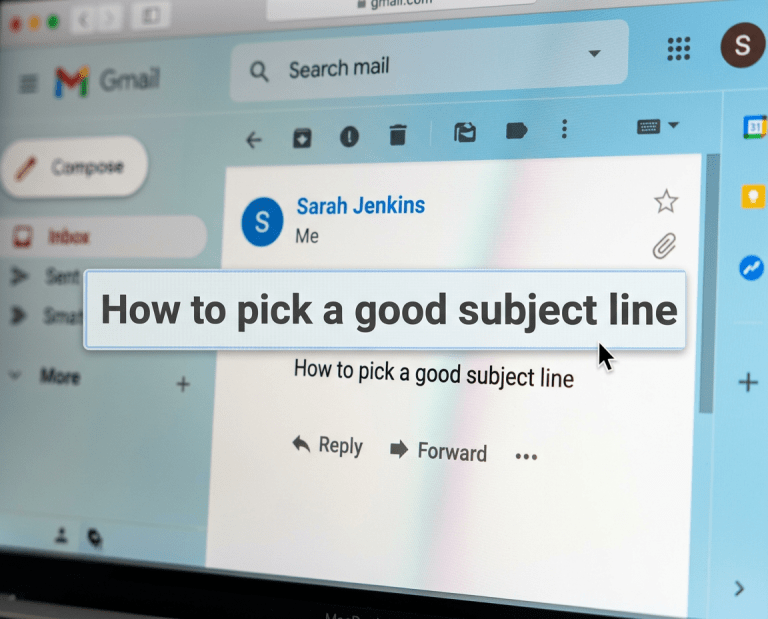
Your email subject line is doing one job. Not selling your product. Not explaining your offer. Just one job: getting someone to tap or click. If it fails at that, nothing else in your email matters. The copy, the imagery, the discount code — all of it is invisible. Email subject lines for ecommerce are the single most important piece of your entire campaign, and most stores treat them like an afterthought.
Here is what the data says right now. 47% of people decide whether to open an email based entirely on the subject line. And nearly one third of people delete emails within seconds based on subject lines alone. You are not competing with bad emails. You are competing with every other message in someone’s inbox, including texts from their family and alerts from their bank. You need to earn that open.
These examples will show you exactly how to do that, organized by campaign type, with eight subject lines per section and the reasoning behind why each one works.
Why Do Most Ecommerce Subject Lines Get Ignored?
Most stores write subject lines that feel like ads. “Check Out Our New Collection.” “Summer Sale Now Live.” “Don’t Miss Our Latest Arrivals.” These lines describe what the store wants. They do not speak to what the customer wants. That is the core mistake.
The best email subject lines are clear, concise, and relevant to your audience. They create curiosity or urgency while accurately representing the email’s content. Notice the word relevant. Not clever. Not cute. Relevant. When a subject line feels like it was written for the specific person reading it, everything changes.
The other issue is length. The average character limit across email providers is around 50 characters, and mobile users see even less. If your subject line gets cut off after “Introducing Our New Spring Col…” you have already lost.
What Makes a Subject Line Actually Work in 2026?
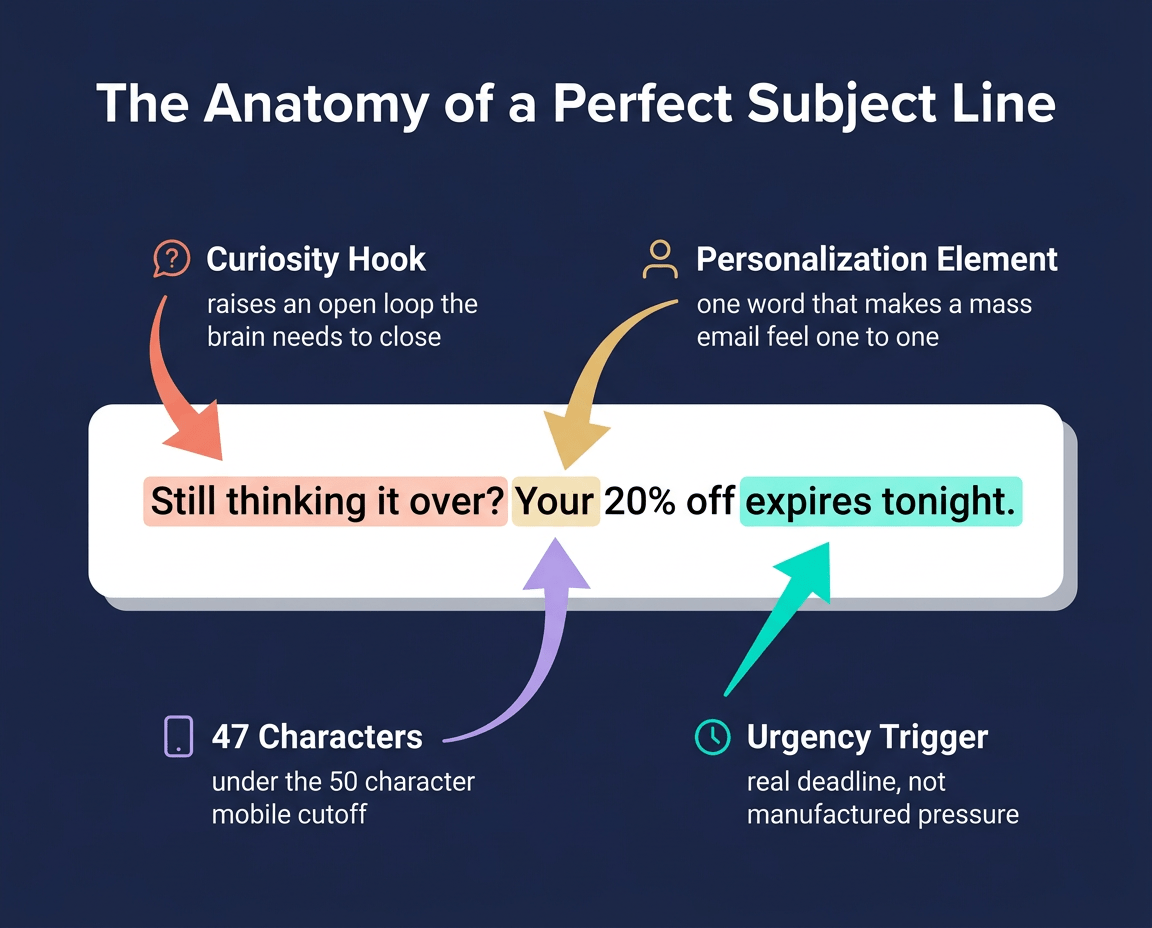
Before we get into the examples, let me give you the framework. There are five things that consistently drive opens right now.
Personalization is the biggest one. Emails with personalized subject lines are 26% more likely to be opened. That does not just mean dropping in a first name. It means referencing a purchase they made, a category they browsed, or a behavior they showed.
Urgency is the second lever. Urgency based emails see a 22% higher conversion rate. The key is making the urgency real. Fake countdown timers and manufactured scarcity have trained customers to tune out. Real deadlines, real stock limitations, and real expiration dates still move people.
Curiosity is the third. A subject line that raises a question your customer genuinely wants answered will get opened. “We heard something about you” is more compelling than “Your order update.” One makes you think. The other feels like admin.
Numbers and specifics are fourth. “Five new items just dropped” outperforms “New arrivals are here.” Specificity signals that the email has actual substance inside. Vague subject lines feel like time wasters.
And last, the question format. Asking questions or posing a challenge in email subject lines can pique interest and make recipients more likely to open. Questions create an open loop in the brain. People need to close that loop, so they open.
Welcome Email Subject Lines
Welcome emails are your highest performing send. They average a 50% open rate, which means you have a captive, curious audience right from the start. Do not waste that with a generic “Welcome to the family” line. You have earned their attention. Use it.
- “You made a great call” — Affirms the signup decision immediately. Short, confident, and zero discount required. Works because it validates the person rather than pitching them.
- “Here is what you just unlocked” — Creates immediate curiosity about subscriber benefits. The word “unlocked” implies value and exclusivity without overpromising.
- “Quick question before we get started” — Disarms inbox expectations and sets up a preference survey inside. Starts a conversation instead of a broadcast.
- “Welcome. Let’s make this worth your time.” — Acknowledges the trust they placed in you by subscribing. Sets a tone of mutual respect rather than one-sided selling.
- “Your first look at what everyone’s buying” — Combines social proof with insider access. New subscribers want to know what is popular. Give it to them immediately.
- “We saved something for you” — Implies a reward is waiting inside. Works especially well when paired with a welcome discount or exclusive offer.
- “Before you go, read this” — Pattern interrupt. Feels like a personal note rather than a marketing email. Drives strong open rates among people who almost missed it.
- “How did you find us? (We’re curious)” — Turns the welcome email into a two-way conversation. Customers who respond become highly engaged long term subscribers.
Cart Abandonment Email Subject Lines
Cart abandonment emails have a 23.33% click through rate, making them one of the best performing automations in ecommerce. The subject line just needs to get out of the way and remind the person why they were interested in the first place. Pressure does not work here. Relevance does.
- “You forgot something good” — Warm, not pushy. Implies quality without screaming at them. The word “good” does a lot of quiet work.
- “Still thinking it over? Here is $10 off” — Addresses the actual objection, price hesitation, in the subject line itself. No need to open to understand the offer.
- “Your cart is getting lonely” — Light personality, zero pressure. Works especially well for lifestyle and apparel brands with a casual voice.
- “We held onto your cart for you” — Positions the brand as helpful rather than desperate. Feels like a service, not a chase.
- “These are going fast — just so you know” — Introduces low-pressure scarcity. The phrase “just so you know” keeps it conversational and honest feeling.
- “One click and it’s yours” — Removes friction from the mental image of completing the purchase. Simple, direct, and action oriented.
- “Did something go wrong at checkout?” — Opens the door to a technical concern rather than assuming they changed their mind. Disarming and practical.
- “Come back. We made it easier.” — Pairs well with a checkout improvement, a saved payment method, or a guest checkout option. Signals that you listened.
Promotional and Sale Email Subject Lines
Promotional emails drive 24% of total ecommerce sales, but only when people actually open them. The ones that get deleted are the ones that announce a sale without giving any reason to care. Your job is to make the offer feel personal, urgent, and worth their 30 seconds.
- “This price lasts 48 hours. That’s it.” — Specific urgency without the all-caps screaming. The period after “That’s it” lands like a final word.
- “We cut prices on the stuff you actually want” — Implies personalization and relevance even in a mass send. “Actually want” sets it apart from generic sale language.
- “40% off ends at midnight. No extensions.” — Combines urgency with finality. The “no extensions” phrase makes the deadline feel real instead of manufactured.
- “Honestly? This is the best deal we have run all year” — Conversational honesty stands out in a sale-filled inbox. First-person candor builds trust while the deal closes.
- “We overdid it. Here is what that means for you.” — Creates curiosity about what happened. Works well for clearance or overstock sales framed with personality.
- “Your exclusive discount expires tonight” — Personalization plus urgency in seven words. “Your” makes it feel individual even at scale.
- “We normally don’t do this” — Signals that the offer is unusual and therefore worth paying attention to. Works for flash sales or one-time promotions.
- “Same product. Lower price. Today only.” — No frills, no fluff. For a no-nonsense audience, directness is the most compelling move you can make.
New Arrival Email Subject Lines
New product drops live or die on whether your list feels like insiders. The goal is not to announce. The goal is to make your subscribers feel like they are getting access that the general public has not seen yet. These subject lines do exactly that.
- “It’s here. You asked for it.” — Works when you have genuinely been building anticipation or responding to customer demand. Feels earned.
- “We just added 12 new things. These three are worth your time.” — Does the curation work for the reader. Saves them from having to browse and signals editorial confidence.
- “First look: what just landed in stock” — “First look” language creates exclusivity without lying about it. Straightforward and compelling.
- “New. And you’re seeing it before anyone else.” — The insider framing is the hook. Subscribers who feel special open more. Full stop.
- “We tested 40 products. These seven made the cut.” — Positions the brand as a curator, not just a seller. Specificity makes the claim believable.
- “Just dropped: the one your friends will ask about” — Social proof baked into the subject line before they even open. Creates anticipation around the product.
- “Back by popular demand — and better than before” — Combines return product excitement with an improvement hook. Two reasons to open in one line.
- “We’ve been sitting on this for months. It’s ready.” — Implies that care and time went into the product. Builds anticipation while communicating quality.
Winback Email Subject Lines
Winback subject lines related to “it’s been a while” see an average open rate of 27%, while “we miss you” lines average around 24%. Both work. The difference is tone. The best winback emails do not guilt the subscriber. They give them a reason to come back that did not exist when they left.
- “We have not seen you in a while. Here is why that changes today.” — Creates a reason to come back rather than just acknowledging the absence. The promise of something new does the heavy lifting.
- “Is this goodbye? (We hope not)” — Light emotional pull without being manipulative. The parenthetical humanizes the entire message.
- “Your old favorites have new competition. Come see.” — Speaks to the customer’s taste history and creates curiosity about what’s new without making them feel bad for leaving.
- “We fixed the thing you hated” — Bold and honest. Works best when you actually improved something customers complained about. Authenticity wins here.
- “A lot has changed. Want a quick catch-up?” — Low commitment ask. “Quick catch-up” removes the pressure of a full re-engagement and feels like a friendly check-in.
- “This one’s just for you — no strings” — Pairs well with a no-purchase-required offer. Removes the transactional feeling that pushed them away in the first place.
- “We were thinking about you” — Disarmingly simple. In a world of aggressive marketing, this level of quiet directness cuts through noise.
- “Your loyalty discount is still waiting” — Reward-forward language. Reminds them they earned something and have not claimed it yet. Curiosity plus value in one line.
Post Purchase Email Subject Lines
Most brands completely ignore the customer after they buy. That is a massive missed opportunity. A well timed post purchase email builds loyalty, drives repeat orders, and turns a one-time buyer into someone who tells their friends. The subject line just needs to keep the relationship warm.
- “Your order is on its way. While you wait…” — Sets up a soft upsell or cross sell opportunity inside the email. The ellipsis creates forward momentum.
- “Three things that go great with what you just bought” — Practical, relevant, and useful. Not a sales email. A helpful one. The framing matters enormously.
- “How did we do? (Takes 30 seconds)” — Feedback requests perform best when you acknowledge the time commitment upfront. Reduces the friction of clicking.
- “Your order is confirmed — and here’s what’s next” — Reduces post-purchase anxiety while setting expectations. Customers who feel informed become loyal customers.
- “People who bought this also loved…” — Social proof plus recommendation. Feels algorithmic in the best way — like a store that actually knows you.
- “Rate your purchase and get 15% off your next one” — Doubles as a review request and a retention tool. Two jobs in one subject line, both valuable.
- “Your item was just delivered. Let us know what you think.” — Timely and relevant. Triggered immediately after delivery confirmation, this lands at exactly the right moment.
- “You’re one order away from [reward tier]” — Loyalty program nudge that creates a clear and immediate goal. Gamification without the complexity.
Re Engagement and Curiosity Email Subject Lines
Sometimes you just need to get someone’s attention without a specific promotional angle. These work well for newsletters, announcements, content driven sends, or any time you want to re-establish a connection with a segment that has gone quiet. Curiosity is your best tool here.
- “Can we ask you one thing?” — The open ended question format consistently generates strong open rates. It is impossible to read without wondering what the question is.
- “Something we have never told you before” — Implies a secret or inside story. Works well for brand origin content, behind the scenes sends, or product transparency pieces.
- “We got some feedback. Here is what we are doing about it.” — Shows accountability and responsiveness. Customers who see a brand listening become customers who stay.
- “You unlocked early access. Here’s how to use it.” — Reward language for re-engagement. Creates a sense of status and gives the subscriber something to act on immediately.
- “We are about to change something. Wanted you to know first.” — Anticipation driven. Works for rebrands, product updates, or pricing changes. Transparency builds trust.
- “This is not a sale email” — Pattern interrupt that works precisely because it subverts expectations. Curiosity about what it is drives the open.
- “Settle a debate for us?” — Interactive and low pressure. Pairs well with a poll, preference question, or product vote inside the email.
- “Read this before your next purchase” — Implies useful information that benefits the reader directly. Practical, not promotional. Opens well across most audiences.
How Do You Test Whether Your Subject Lines Are Actually Working?
You write them, you test them, and you let the data decide. Brands that A/B test every email see email marketing ROIs that are 37% higher than brands that never test at all. That is a meaningful gap for something that takes maybe 10 extra minutes per campaign.
The simplest version is this: write two subject lines for every send. Same email, two different subject lines, sent to a small portion of your list. After a few hours, the winner goes to everyone else. Tools like Klaviyo (klaviyo.com) and Mailchimp (mailchimp.com) make this process straightforward with built in A/B testing features. You do not need a big list or a big budget to make this work. You need consistency.
What you are testing for is not opens alone. Opens have become an unreliable metric because of Apple Mail Privacy Protection, which inflates open rates by preloading pixels. Only 15% of email marketers still rely on open rates as a primary measure of success, and that number is dropping fast. What actually matters is clicks and revenue per email. Did they open it and do something? That is the real measure of whether your subject line delivered on its promise.
What Is the One Thing Most Ecommerce Stores Are Getting Wrong About Subject Lines?
They are writing for themselves instead of for their customer. “New Collection Alert” tells you what the store is excited about. “The three pieces everyone is adding to their cart right now” tells the customer something useful about other people’s behavior, which triggers social proof and curiosity at the same time. Tiny reframe. Completely different result.
The right email subject lines for ecommerce do not require a copywriting degree or a six figure marketing team. They require you to think like the person on the other side of the inbox. What do they want? What are they worried about? What would make them stop scrolling for three seconds? Start there. The right subject line is the difference between a sale and an ignored email, and now you have 56 of th